Top 10 Cheapest Countries for International Students (That Still Have High-Quality Education)
- wordly Admissions team

- 3 days ago
- 4 min read
1. Germany

Germany continues to be the global benchmark for accessible, high-quality education. What many students do not know is that Germany’s tuition-free policy for public universities was originally inspired by the principle that education should be a public good, not a commodity.
According to the German Federal Ministry of Education (BMBF), over 380,000 international students were enrolled in 2024, a record driven largely by the absence of tuition fees.
Typical tuition: €0 at public universities
Semester contribution: €200–€350
Living costs: €850–€1,000/month
Quote:
"Education is not a privilege. It is a civil right." – Johannes Rau, former President of Germany
2. Norway
Norway’s public universities charge zero tuition fees for all students, regardless of nationality. This is rooted in the Nordic philosophy that strong societies begin with equally accessible education.
What many don't know: Norway spends over 6.7% of its GDP on education (OECD, 2024), one of the highest in the world.
Tuition: Free at public universities
Living costs: €1,100–€1,500/month

Expert insight:
A 2023 OECD review noted that “Norway’s education outcomes remain among the world’s highest despite an open-access system.”
3. Taiwan

Taiwan quietly ranks among the best-value destinations in Asia. It consistently appears in QS’s Top 20 “Best Student Cities for Affordability”.
Unknown fact: Taiwan’s National Cheng Kung University operates one of Asia’s oldest AI research centers, dating back to the 1970s—long before AI became mainstream.
Tuition: USD 1,600–3,000/year
Living costs: USD 500–800/month
Book quote:
"Taiwan’s rise is a story of discipline, education, and resilience." – Richard Bush, Taiwan’s Democracy and the China Challenge
4. Poland

Poland offers some of the cheapest tuition fees in Europe while maintaining strong academic standards, particularly in medicine, engineering, and business.
Surprising fact: The University of Warsaw ranks within the top 3% globally, yet tuition remains among the lowest in the EU.
Tuition: €2,000–€4,000/year
Living costs: €400–700/month
Government data:
In 2024, Poland hosted over 105,000 international students (Statistics Poland).
5.INDIA


India offers an exceptional value-to-quality ratio, with low-cost public education and some of the world’s most respected institutions in technology, medicine, law, and business.
Unknown fact: India is home to three of the world’s top 100 engineering institutions according to the QS 2025 rankings.
Tuition: USD 400–2,000/year (public); USD 2,000–4,000 (affordable private universities)
Living costs: USD 250–500/month
Research quote:
“India’s human capital story is inseparable from its education system.” – Devesh Kapur, The Oxford Handbook of the Indian Constitution
6. Portugal


Portugal is one of the most cost-effective destinations in Western Europe. Public universities charge low tuition, and many private institutions offer competitive pricing, especially for students from Portuguese-speaking countries.
Unknown fact: Portugal ranks among the Top 10 safest countries globally (Global Peace Index 2024), an important factor for student mobility.
Tuition: €1,000–3,000/year
Living costs: €500–800/month
Government insight:
According to DGES Portugal, international student enrollment has tripled since 2010, driven by affordability and safety.
7. Mexico


Mexico offers one of the lowest-cost education systems in the Americas. Private universities such as Universidad de Guadalajara and Universidad de Monterrey offer reputable programs at prices significantly lower than U.S. or Canadian institutions.
Unknown fact: Mexico has one of Latin America's strongest research outputs in public health, agriculture, and sustainability, according to UNESCO Science Report (2024).
Tuition: USD 500–1,500/year (public); USD 2,000–4,000 (private)
Living costs: USD 400–700/month
Quote:
“Mexico’s investment in higher education has played a decisive role in its scientific development.” – UNESCO Science Report, 2024
8. Malaysia

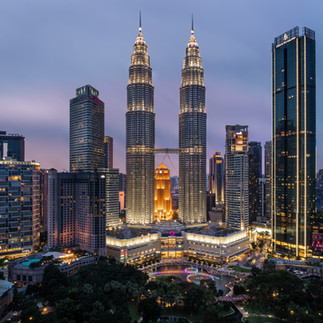
Malaysia is a rising powerhouse in international education, with campuses of British and Australian universities offering degrees at a fraction of the original cost.
Unknown fact: Kuala Lumpur ranked #1 globally for affordability in the QS Best Student Cities ranking (2023).
Tuition: USD 1,500–4,000/year
Living costs: USD 300–600/month
Expert insight:
The Malaysian Ministry of Higher Education projects over 250,000 international students by 2026, emphasizing Malaysia’s affordability strategy.
9. Turkey


Turkey combines cultural richness with accessible education. Both public and many private universities offer extremely competitive fees.
Unknown fact: Turkey hosts over 230 universities, one of the largest systems in Europe and the Middle East.
Tuition: USD 600–1,500/year (public); USD 2,000–5,000 (affordable private universities)
Living costs: USD 300–500/month
Quote:
“Education is the most powerful weapon for shaping civilizations.” – Mustafa Kemal Atatürk
10. South Africa

South Africa is Africa’s most academically advanced destination, with globally ranked universities such as the University of Cape Town and Wits University.
Unknown fact: The University of Cape Town ranks among the top 1% globally in research output, particularly in medicine and climate science.
Tuition: USD 2,000–5,000/year
Living costs: USD 400–700/month
Expert note:
The South African Department of Higher Education reports steady international growth, particularly from SADC countries seeking affordable, high-quality programs.
Final Reflections for Wordly Admissions
At Wordly Admissions, we believe affordability should never limit ambition. These 10 countries demonstrate that students can access respected global degrees without excessive tuition fees, whether through public institutions or reputable low-budget private universities.
Our mission is to help students navigate these options strategically, ensuring they choose destinations that align with their budget, academic goals, cultural preferences, and long-term career plans.
Bibliographic References (APA Style)
BMBF. (2024). International Students in Germany Report. German Federal Ministry of Education and Research.DGES Portugal. (2024). Relatório Estatístico do Ensino Superior. Direção-Geral do Ensino Superior.OECD. (2024). Education at a Glance 2024. Organisation for Economic Co-operation and Development.QS Rankings. (2023–2025). QS World University Rankings & Best Student Cities. Quacquarelli Symonds.Statistics Poland. (2024). Higher Education Statistical Bulletin.UNESCO. (2024). UNESCO Science Report: The Race Against Time for Smarter Development.Bush, R. (2015). Taiwan’s Democracy and the China Challenge. Brookings Institution Press.Kapur, D. (2016). The Oxford Handbook of the Indian Constitution. Oxford University Press.


Comments